Multi-Agent Systems (MAS)
A library of specialized, pre-built agent architectures ready for deployment.
(Click any system to view architecture and samples)
See these systems in action in our case studies, or visit the blog for architecture deep dives.
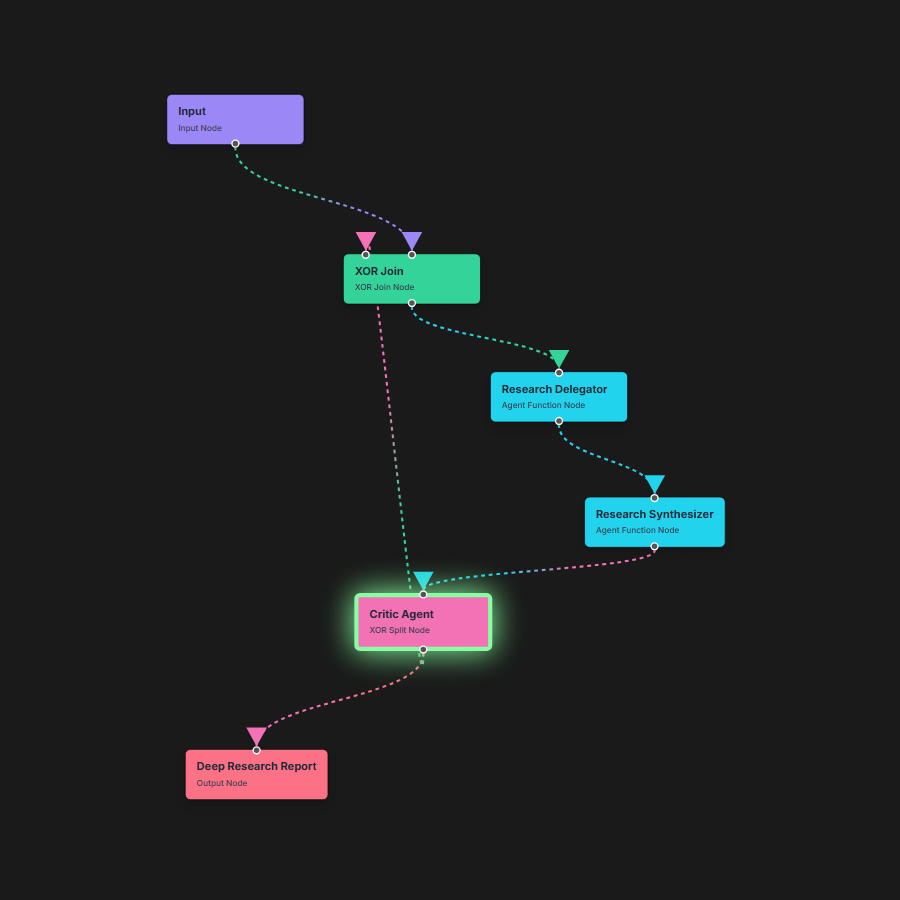 Deep Researcher
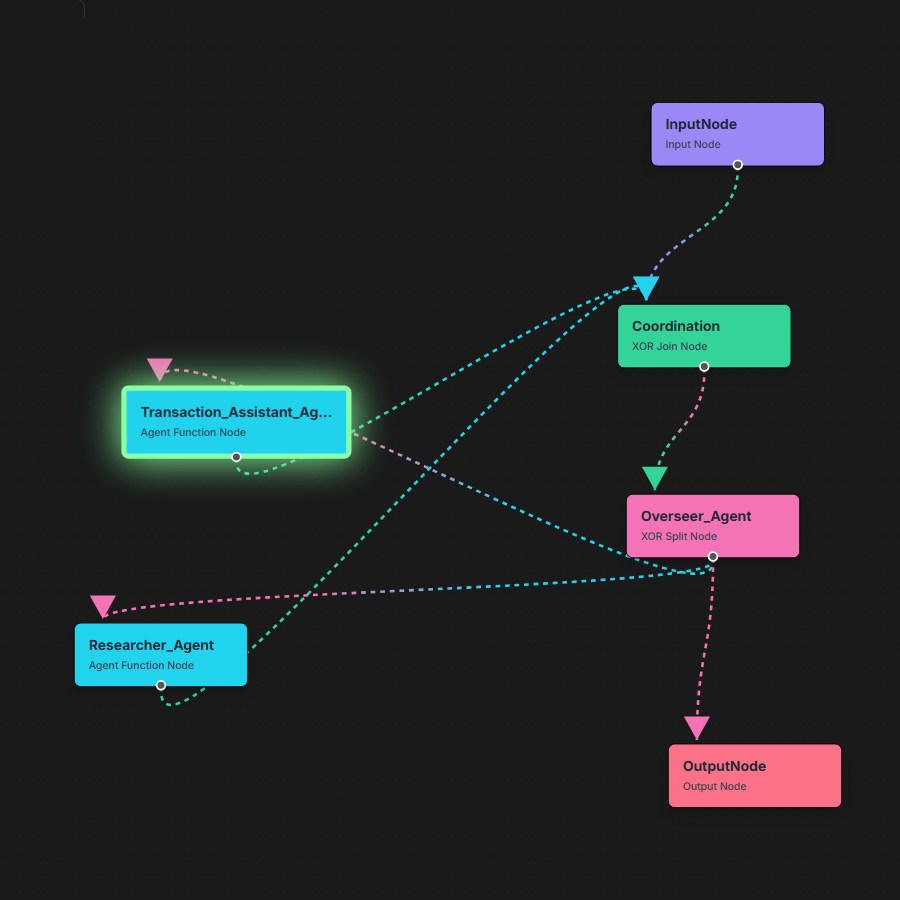 CFO Financial Advisor
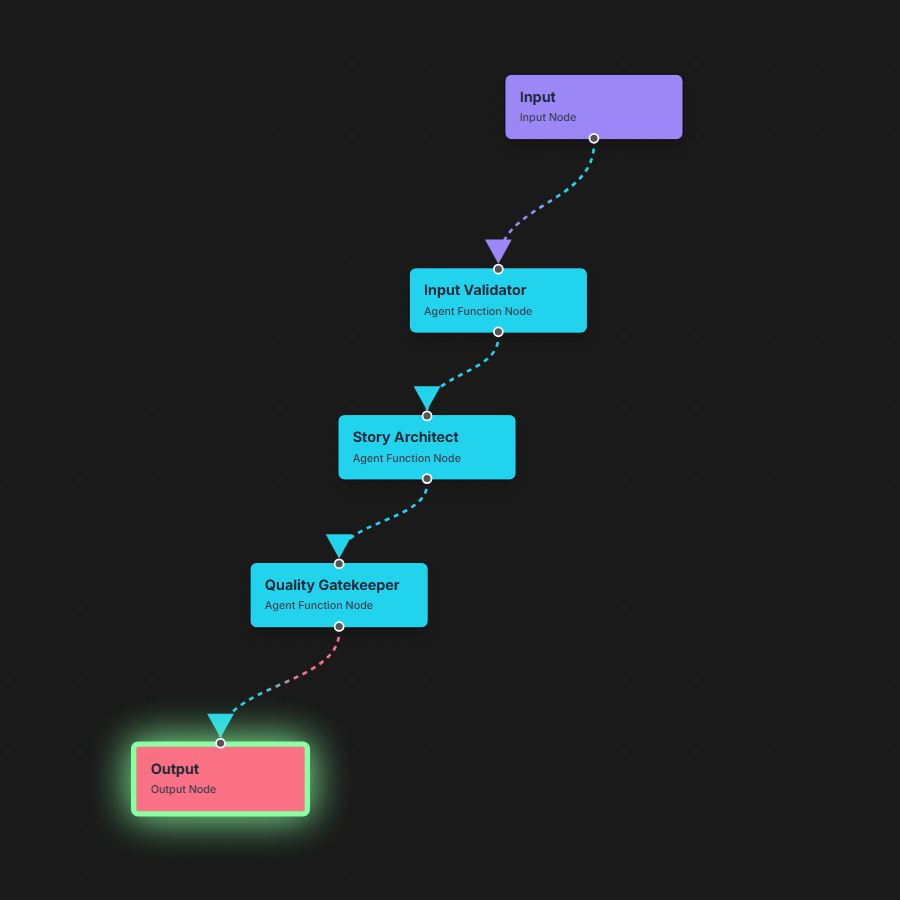 User Story Generator
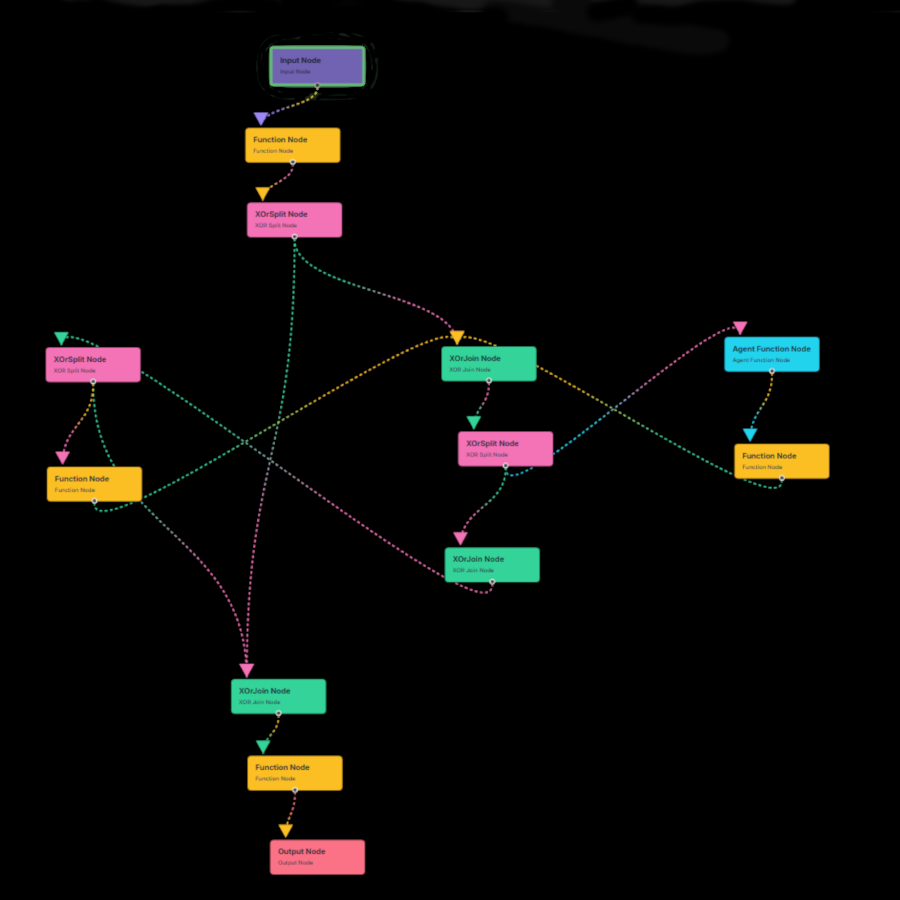 Content Creator
 Non-Fiction Book Writer
 Ableism Debiasing
Deep Researcher
Decomposes complex research questions into parallel investigations and delivers structured, citation-backed reports with quality scoring.
Research-intensive decisions in business, policy, and technical domains demand comprehensive evidence drawn from multiple source types. Gathering that evidence manually means searching across academic databases, industry publications, government sources, and news outlets, then cross-referencing findings and reconciling contradictions between them. The process is slow, prone to gaps, and difficult to reproduce consistently.
The Deep Researcher decomposes complex research questions into focused subtasks and investigates them in parallel, drawing from sources including arXiv, web search, and specialized databases. The system synthesizes findings into a structured report organized by theme. Every claim in the final output carries an inline citation linked to its source material. When sources conflict, the report presents both positions with their respective evidence. A quality scoring system reports verification rates, source diversity, and overall confidence for the research as a whole.
Potential Use Cases
- Academic literature reviews requiring comprehensive coverage across multiple databases, with properly cited sources and identification of gaps in existing research.
- Market and competitive intelligence reports for strategy teams, with data drawn from credible sources and structured for stakeholder presentations.
- Due diligence investigations where identifying contradictory evidence is as important as confirming a thesis.
- Policy analysis that presents multiple perspectives with proper attribution to support evidence-based decision-making.
- Technical feasibility assessments that consolidate academic papers, industry documentation, and implementation case studies into a single analysis.
Key Features
- Decomposes complex questions into independent subtasks and researches them simultaneously. Typical research timelines compress from days to hours.
- Inline citations for every factual claim, with direct links to source material for independent verification.
- Automated contradiction detection surfaces disagreements between sources and presents both perspectives with evidence.
- Quality metrics including verification rate, source diversity, and confidence scores provide transparency about research completeness.
- Multi-source coverage spans academic databases, web search, and specialized sources.
- Final reports are organized thematically. Findings from different sources are woven into a single analytical structure.
- Research Delegator: Analyzes the incoming research query, identifies all relevant dimensions, and decomposes the work into independent subtasks for parallel investigation. Each subtask is scoped to be self-contained and actionable.
- Research Synthesizer: Collects findings from all parallel research tasks, identifies common themes, reconciles contradictions, and structures the output into a thematic report with inline citations. Unverified claims are flagged explicitly.
- Critic Agent: Evaluates the completed report against quality thresholds including citation completeness, verification rate, and coverage of the original query. Reports that fall below thresholds are returned for revision before delivery.
Ableism Debiasing
An automated inclusive language auditor that analyzes text for ableist bias, outdated terminology, and harmful framing against recognized accessibility and disability language standards.
“I am confident that Innervation’s AI-powered Debiaser provides a powerful and practical solution to address concerns of ableism, whether within government institutions, corporate environments, or in the everyday experiences of individuals.”
Max Brault Max Brault is a leading accessibility consultant and disability rights activist. He heads Nīewe’s Accessibility Consulting Services, serves as Co-Vice President of ForHumanity Canada, and is CEO of the Max Brault SMA Foundation. He is also the author of The Race to the Starting Line, which details his pivotal role in shaping the Accessible Canada Act, Canada’s most significant equity legislation since the Charter of Rights and Freedoms.
The Ableism Debiasing system is a specialized communication tool designed to help organizations create truly inclusive and respectful content. In an era where language evolves rapidly, it can be difficult to stay current with the nuances of disability-inclusive communication. This system acts as an automated inclusive language auditor, analyzing your text to ensure it is free from harmful stereotypes, outdated terminology, and subtle biases that might unintentionally marginalize people with disabilities.
By integrating this MAS into your workflow, you move beyond simple grammar checks to a deeper level of cultural competence. The system helps you understand the reasoning behind its suggestions, empowering your team to write with greater empathy and precision. Whether you are drafting a public press release or an internal policy, this tool ensures your message reflects a modern, dignified, and empowering perspective on disability.
Potential Use Cases
- Inclusive Recruitment: Audit job descriptions to ensure language doesn’t discourage neurodivergent or physically disabled candidates from applying.
- Media and Journalism: Check articles against recognized disability language guidelines to maintain professional standards and avoid offensive tropes.
- Corporate Policy: Review internal handbooks and training materials to foster a workplace culture that is genuinely welcoming to all employees.
- Healthcare Communications: Ensure patient education materials use respectful, person-first or identity-first language that builds trust.
- Marketing and Advertising: Vet campaign copy to avoid inspiration porn or framing disability as tragedy, protecting brand reputation and ensuring authentic representation.
Key Features
- Context-Aware Analysis: Identifies not just problematic words, but subtle ways that framing might be unintentionally patronizing or biased.
- Instant Standard Alignment: Automatically checks against recognized accessibility and disability language guidelines.
- Actionable Rectifications: Provides clear, ready-to-use alternatives for problematic phrasing.
- Comprehensive Quality Control: Multi-step verification ensures suggestions are accurate and maintain original intent.
- Brand Protection: Catches potential issues before they reach the public.
- Educational Feedback: Explains the reasoning behind suggestions so writers learn best practices over time.
Current Benchmarking Guides
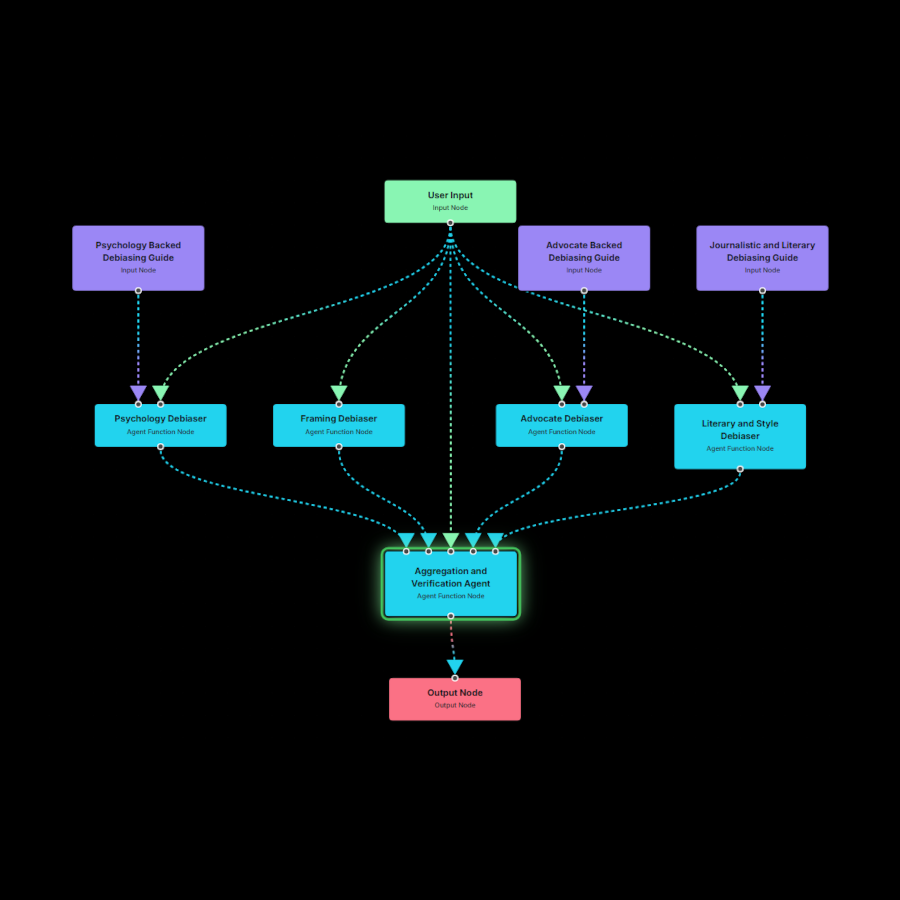
The system currently benchmarks against three leading disability language references:
- NCDJ Disability Language Style Guide — National Center on Disability and Journalism (Arizona State University)
- APA Inclusive Language Guide — American Psychological Association (2nd ed., 2023)
- A Way with Words and Images — Government of Canada guide for communicating with and about persons with disabilities
Additional guides can be integrated to reflect regional, cultural, or industry-specific requirements. For example, organizations operating in the UK may prefer British guidelines over North American references.
- Framing Debiaser Agent: Acts as a sensitive reader that looks beyond individual words to find hidden biases in how a message is structured. Identifies and flags underlying assumptions that might unintentionally portray disability in a negative or limiting light.
- Guideline Debiaser Agent: Serves as an expert editor, checking text against recognized accessibility and disability language guidelines. Spots outdated or offensive terms and suggests modern, respectful alternatives with citation-based feedback.
- Aggregation and Verification Agent: Acts as the final quality control manager, combining insights from the other agents into one clear report. Double-checks all suggestions for accuracy and provides a polished, ready-to-use version with Original Content, Debiased Content, and Justification.
CFO Financial Advisor
Real-time portfolio intelligence, cited market research, and transaction execution through a single interface with full audit trails.
The CFO Financial Advisor connects directly to financial data sources via database integration and delivers real-time portfolio intelligence, cited market research, and transaction execution through a single interface. Users can query portfolio performance, research market trends, and manage trades with no need to switch between tools or aggregate data from multiple platforms.
Research findings arrive with specific citations and attached source material. Transactions are recorded with complete details for audit and compliance. The system maintains a strict separation between research and transaction functions, with an oversight layer that verifies accuracy before presenting results.
Reports are generated in standardized formats with automated validation to confirm that all required fields are present and correctly populated, meeting the documentation requirements of regulated environments with no additional manual preparation.
Potential Use Cases
- Portfolio performance analysis with historical comparisons against benchmarks, detailed breakdowns of gains and losses, and trend visualization over configurable time periods.
- Pre-trade market research with cited analysis from credible sources. Decision-makers receive verifiable evidence before capital is committed.
- Batch transaction management where multiple trades can be queued, reviewed as a group, and executed together with full transparency on exchange rates, fees, and expected outcomes.
- Compliance teams can generate regulatory reports in standardized formats with automated field validation.
- Real-time position monitoring across multiple currencies or asset classes, with no need to aggregate data from separate sources manually.
Key Features
- Direct database integration provides real-time access to financial data with no manual exports required.
- All market research includes specific citations and source attachments. Users can trace any finding back to its original source.
- Transaction queue allows users to plan, review, and execute multiple trades as a coordinated batch.
- Standardized financial reports are generated with built-in validation against regulatory format requirements.
- Separate agents handle research and transactions, with an oversight step that confirms all information before it reaches the user.
- A complete audit trail records every action, from research queries to executed trades, with full detail and source attachments.
- Overseer Agent: Primary interface for financial queries. Coordinates research and trading activities, validates all information before presentation, handles direct database queries for portfolio data, and generates standardized financial reports with regulatory validation.
- Transaction Assistant Agent: Manages trade operations including queue management, gain/loss calculation, order execution, and wallet tracking. Maintains a complete transaction history with full details for audit purposes.
- Researcher Agent: Conducts external market research across financial news, academic sources, and relevant publications. All findings include citations and source attachments so users can verify the underlying evidence independently.
User Story Generator
Produces a complete, prioritized backlog from a project description, with sized stories, acceptance criteria, and automatic splitting.
The gap between a stakeholder’s feature request and a set of development-ready user stories typically requires multiple rounds of refinement, estimation, and splitting. The User Story Generator closes that gap by accepting a high-level project description and producing a complete, prioritized backlog formatted for immediate sprint planning.
Each story follows the standard “As a [role], I want to [action], so that [value]” structure and includes 3 to 7 testable acceptance criteria in Given-When-Then format. Stories are sized with story points (1–8) and categorized as Must, Should, or Could have. Stories that exceed a manageable complexity threshold are automatically split into smaller, self-contained deliverable pieces.
A three-stage quality process underpins the output. The system first validates the project against the target technical framework to confirm that the proposed scope is feasible. It then generates and structures the stories. A final review confirms that all stories are complete, actionable, and aligned with the original request before the backlog is delivered.
Potential Use Cases
- Startup teams can describe an MVP concept in plain language and receive a structured backlog ready for their first sprint planning session.
- High-level feature requests from stakeholders, broken down into prioritized, estimated user stories without weeks of iterative refinement.
- RFP responses where sales teams need a structured delivery plan with effort estimates to demonstrate how the solution will be built.
- Legacy system migration planning, where existing functionality needs to be captured as properly formatted stories to define the modernization scope.
- Agile onboarding for new product owners, who can see their own project ideas translated into properly structured stories with acceptance criteria and sizing.
Key Features
- Produces a complete, prioritized backlog from a single project description, with stories sized and ready for sprint planning.
- Story points (1–8) are assigned based on complexity. Separate estimation sessions are not required.
- Each story includes 3 to 7 testable acceptance criteria in Given-When-Then format.
- Oversized stories are automatically split into independently deliverable pieces.
- Priority categorization (Must / Should / Could) supports scope management and stakeholder alignment.
- Three-stage quality process validates feasibility, structures stories, and checks output before delivery.
- Input Validator: Validates the project description against the target technical framework, identifies key deliverables and required features, and confirms that the proposed scope is feasible before story generation begins.
- Story Architect: Transforms validated requirements into formatted user stories with acceptance criteria, assigns story points, sets priorities, and splits stories that exceed complexity thresholds.
- Quality Gatekeeper: Checks all generated stories for completeness, clarity, and alignment with the original request. Catches missing acceptance criteria, ambiguous requirements, or stories that lack standalone value before the backlog reaches the team.
Content Creator
Parallel content production pipeline that scales from tens to thousands of pieces while maintaining consistent brand voice and quality.
Organizations with large content footprints face a persistent bottleneck: producing hundreds or thousands of individual content pieces while holding consistent voice, quality, and relevance across all of them. Product catalogs, localized marketing campaigns, personalized outreach sequences, and multi-platform social calendars all demand volume that outpaces manual processes.
The Content Creator processes content requests in parallel. Input can be structured data (spreadsheets, product databases, campaign briefs) or unstructured descriptions. The system adapts its output to the target format and maintains organizational tone and messaging standards across all content, whether the output is a 50-word social post or a 2,000-word article.
The system generates contextually appropriate content that accounts for audience, format, and purpose. The result is a production pipeline that scales volume without degrading the specificity or professionalism of individual pieces.
Potential Use Cases
- E-commerce teams processing a product database into unique, SEO-informed descriptions, with each entry tailored to the item’s distinct features.
- Monthly social media calendars across multiple platforms, generated from a set of campaign themes and audience parameters.
- Personalized outreach email campaigns produced from customer data at volumes that manual writing cannot sustain.
- Content managers outlining a series of related topics and receiving structured drafts that maintain a cohesive narrative across the series.
- Multi-client agencies can process content briefs in parallel, with each output set matched to the appropriate client voice.
Key Features
- Parallel processing handles multiple content tasks concurrently. Work that would take days sequentially completes in hours.
- Accepts batch input from spreadsheets, databases, or structured briefs.
- Maintains consistent brand voice and messaging standards across all outputs, regardless of volume.
- Adapts to content formats ranging from short social posts to long-form articles with no separate workflow configurations needed.
- Each piece is generated with awareness of context, audience, and purpose.
- Scales from tens to thousands of content pieces with no degradation in output quality.
- Idea Intake Agent: Receives raw content ideas from users and performs initial parsing and structuring. Extracts the core concept and prepares it for validation. Outputs a structured idea object containing the user’s intent, topic, and any initial parameters.
- Idea Validation Agent: Evaluates incoming content ideas against feasibility criteria, market relevance, and content viability standards. Identifies potential issues with scope, clarity, or execution. Generates an idea validation report, a refined idea description, and a proposed title that captures the essence of the content.
- Revision Coordinator Agent: Acts as a decision gateway after validation. Reviews the validation report and determines whether the idea needs refinement or is ready for content creation. If revisions are needed, generates a revision request with specific feedback and routes the workflow back to the Idea Validation Agent for another iteration.
- Content Research & Creation Agent: Once an idea is approved, conducts research and generates the actual content. Has access to web search capabilities (Brave Search, Google Search, webpage reading and summarization tools) to gather supporting information. Produces the final content piece along with research findings and sources used during creation.
- Quality Assurance Agent(s): Multiple quality checkpoints that evaluate created content against quality standards. Verify content completeness, coherence, alignment with the original validated idea, proper integration of research findings, and overall readiness for delivery. If quality issues are detected, content is routed back to the Content Research & Creation Agent for refinement.
- Output Delivery Agent: Final stage agent that packages the approved content along with metadata (discoveries, validation reports) and delivers it to the user. Ensures all workflow artifacts are properly formatted and accessible.
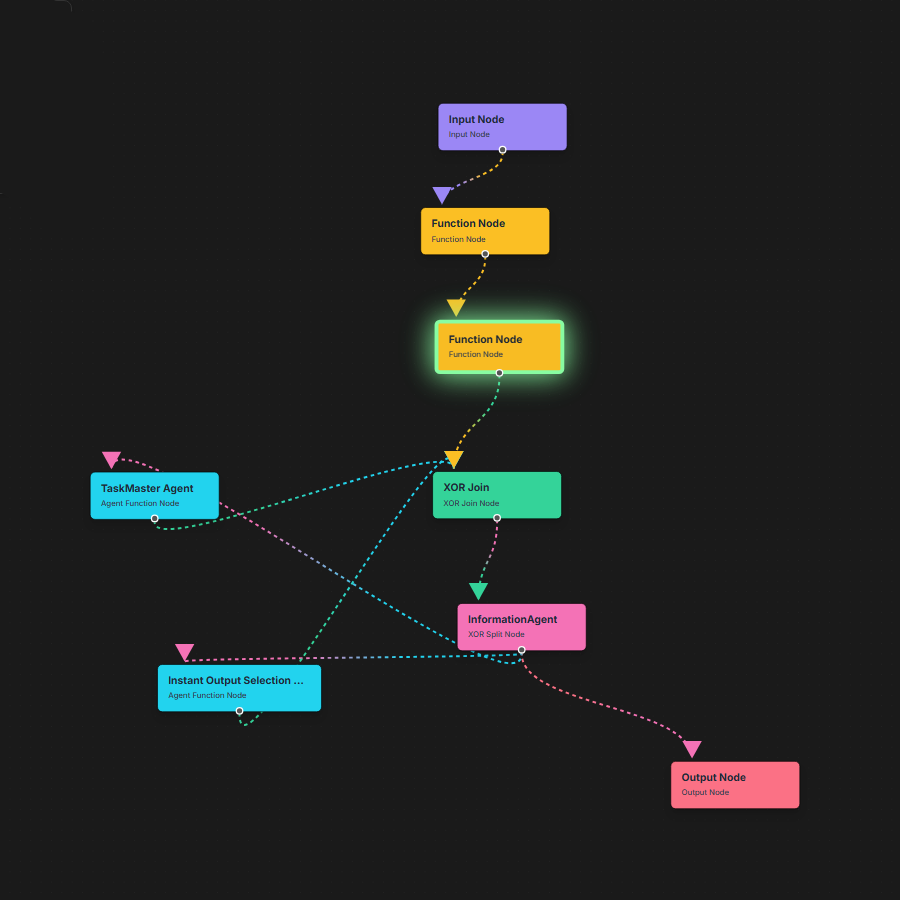
Non-Fiction Book Writer
Structured authoring pipeline with citation-backed research, chapter drafting, fact-checking, and manuscript-level integration review.
A non-fiction book requires sustained coordination across research, drafting, fact-checking, and editorial review. For most authors, this means months or years of work, and the longer a manuscript takes, the harder it becomes to maintain consistency in voice, accuracy, and argument across chapters. Subject matter experts with deep knowledge often lack the time to undertake a full manuscript alongside their primary work.
The Non-Fiction Book Writer breaks the authoring process into structured phases. It begins by generating a proposed chapter outline for user review and approval. Once the structure is confirmed, the system conducts citation-backed research for each chapter, drafts content that integrates those findings into readable prose, and verifies factual claims against the underlying sources. After all chapters are complete, a final integration review evaluates the manuscript as a whole for continuity, consistent messaging, and narrative flow across the full text. The user retains editorial control throughout: the outline is subject to approval before production begins, and the completed manuscript is delivered with full citations.
Potential Use Cases
- Industry professionals compiling years of domain expertise into an authoritative guide without stepping away from their primary role for an extended writing period.
- Academic-to-general translation, where complex research findings need to be presented in accessible prose without sacrificing scientific accuracy.
- Thought leadership publishing for executives and consultants, with supporting market research and competitive analysis conducted alongside the drafting.
- Multi-source historical accounts where cross-referencing, chronological accuracy, and contradiction resolution across chapters are essential to the credibility of the finished work.
- Technical authors producing detailed reference manuals and how-to guides, where complex information must be organized into a logical chapter structure and verified systematically.
Key Features
- Generates a proposed chapter outline for user review and approval before any research or drafting begins.
- Conducts independent, citation-backed research for each chapter, with sources gathered from relevant publications and databases.
- Drafts chapters that integrate research into cohesive prose while holding a consistent voice across the full manuscript.
- Systematic fact-checking verifies each chapter’s claims against its sources before the chapter is finalized.
- A manuscript-level integration review evaluates the completed book for structural consistency, readability, transitional flow between chapters, and fidelity to the approved outline.
- Outline Architect Agent: Examines the topic and produces a proposed chapter structure with logical sequencing and complete subject coverage. The outline serves as the production roadmap and is subject to user approval before work proceeds.
- Chapter Research Agent: Conducts focused research for each chapter, compiling cited evidence from credible, relevant sources. Where sources conflict, the agent documents both positions.
- Chapter Drafting Agent: Produces chapter drafts that integrate research findings into accessible, well-structured prose. Maintains consistent voice and style across chapters, and ensures each chapter functions both as a standalone section and as part of the larger work.
- Accuracy Verification Agent: Checks each drafted chapter against its sources, verifying factual claims and catching errors before they propagate through the manuscript.
- Manuscript Integration Agent: Assesses the fully assembled book for continuity, readability, and fidelity to the approved outline. Examines transitions between chapters, checks for consistent messaging, and confirms that the manuscript reads as a unified work.